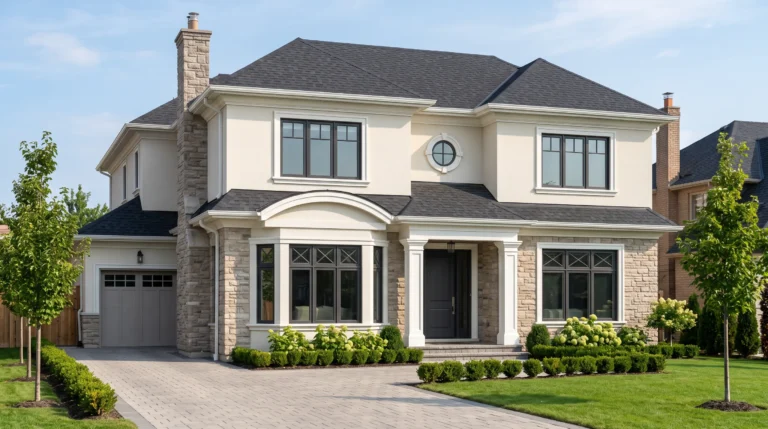
Direct Answer: Do Flomary Flexible Tiles comply with the Australian National Construction Code (NCC 2022)? Yes. Flomary Flexible Tiles are engineered for full compliance with the Australian National Construction Code (NCC 2022 / BCA) Section C fire safety standards. Formulated with modified clay materials (MCM) and natural mineral quartz, they achieve non-combustibility ratings per AS 1530.1 and an early fire hazard flammability index of zero per AS 1530.3. They are fully certified for bushfire-prone zones up to BAL-40 and BAL-FZ under AS 3959, offering an ultra-lightweight (3.5–4.5 kg/m²), UV-stable, and salt-spray-resistant facade cladding for commercial and residential developments across Sydney, Melbourne, Brisbane, and coastal Australia.
The Australian Facade Landscape: NCC 2022 Fire Reforms & Harsh Coastal Climates
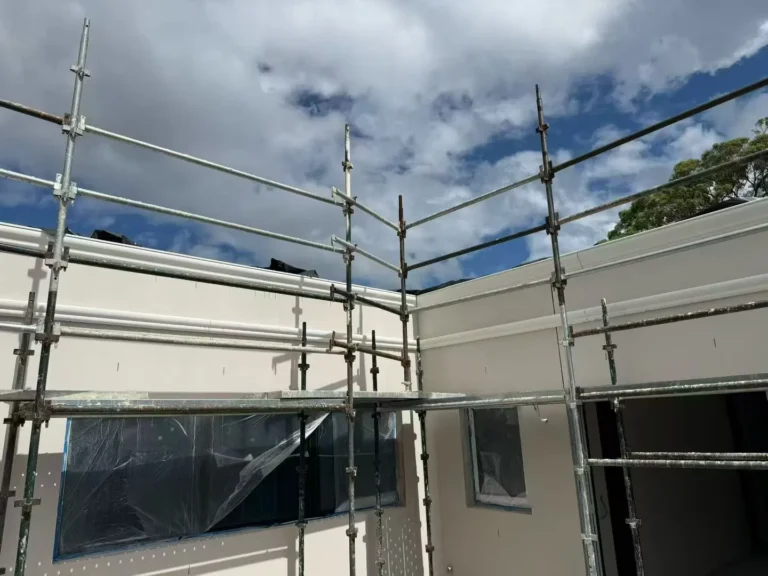
Following comprehensive non-combustibility reforms under the National Construction Code (NCC 2022 / Building Code of Australia), specifiers, developers, and facade engineers across Australia must meet rigorous fire safety, weatherproofing, and durability mandates for multi-residential and commercial facades:
- Combustible Cladding Ban: Traditional composite aluminum panels (ACP) with PE cores and lightweight plastic claddings are heavily restricted or prohibited across Type A and Type B commercial construction.
- Extreme UV Radiation & Coastal Salinity: Facades in Queensland, New South Wales, and Western Australia experience intense solar UV indices (11+) combined with high atmospheric salt concentrations. Traditional paints peel, timber bleaches, and synthetic stone composites experience matrix degradation.
- Bushfire Attack Levels (AS 3959): Properties situated in designated Bushfire Prone Areas (BPA) require exterior building envelopes capable of resisting high radiant heat fluxes (up to 40 kW/m² for BAL-40) and direct flame contact (BAL-FZ).
- Lightweight Facade Solutions: Flomary Modified Clay Flexible Tiles weigh just 3.5–4.5 kg/m², eliminating the massive crane hire, heavy structural footing engineering, and costly installation labor required for 40mm thick imported stone slabs.
Australian Standards & Compliance Matrix: Flomary Flexible Tiles
| Australian Standard (AS) | NCC 2022 Requirement | Flomary Flexible Tiles Performance | Architectural Benefit |
|---|---|---|---|
| AS 1530.1: Combustibility Test | Non-combustible external wall material | Pass: Non-combustible core, zero self-ignition | Approved for Type A & B high-rise & commercial facades |
| AS 1530.3: Early Fire Hazard Test | Ignitability & Smoke indices compliance | Ignitability: 0 | Spread: 0 | Heat: 0 | Smoke: 0–1 | Zero smoke development hazard for exit corridors |
| AS 3959: Bushfire Attack Level | Envelope defense for BAL-12.5 through BAL-FZ | Complies with BAL-40 and BAL-FZ exterior requirements | Safe specification for regional NSW, VIC & WA builds |
| AS/NZS 4586: Slip & Weather Durability | Accelerated weathering (2,000+ hrs UV exposure) | ΔE < 1.5; zero chalking, surface cracking, or blistering | Maintains deep natural travertine, slate & granite textures |
| AS 4654.1: External Waterproofing | Resistance to continuous coastal moisture & driving rain | Water absorption < 2%; polymer-cement water barrier | Zero salt efflorescence in coastal oceanfront projects |
Engineering Applications Across Australian Developments
1. High-Density Multi-Residential & Mixed-Use Towers (Sydney & Melbourne)
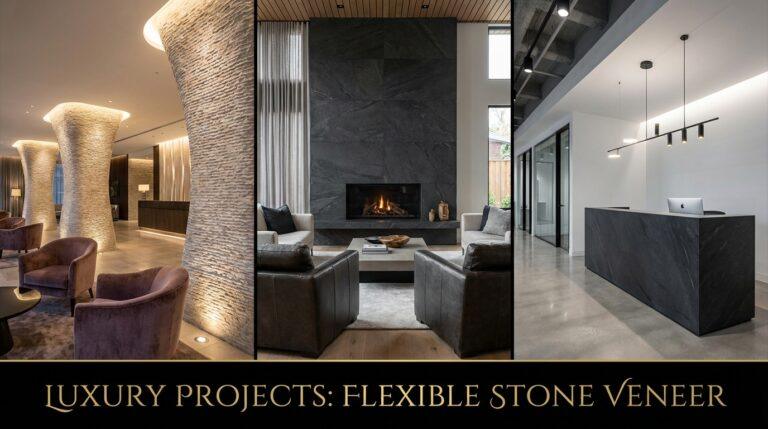
Modern residential apartment towers requiring non-combustible external cladding gain enormous economic advantages. Because Flexible Tiles bend to a radius of R ≥ 200 mm, architects can wrap curved balconies, column wraps, and organic facade geometries seamlessly without expensive CNC-curved natural stone block cutting. Pairs perfectly with our lightweight EPS Mouldings for exterior decorative bands and cornices.
2. Coastal Luxury Residences & Resorts (Gold Coast, Sunshine Coast, Perth)
Coastal developments face high sea-spray salinity that deteriorates conventional metal trims and causes efflorescence in porous stone. Flomary Flexible Tiles are formulated with inert mineral quartz bound in high-performance polymer matrices that remain impervious to salt crystallization and marine airborne moisture.
3. Direct Containerized Supply Chain: Ningbo / Shenzhen to Australian Ports
Flomary operates automated manufacturing lines providing direct factory-to-project B2B supply. We ship full container loads (FCL) directly to:
- Port Botany (Sydney, NSW) – 14-day ocean transit
- Port of Melbourne (VIC) – 16-day ocean transit
- Port of Brisbane (QLD) – 12-day ocean transit
- Fremantle Port (Perth, WA) – 15-day ocean transit
Every shipment includes comprehensive batch testing certificates, custom project labeling, and installation tooling packages.
Frequently Asked Questions for Australian Builders & Certifiers
How do Flomary Flexible Tiles compare in installed cost to traditional stone in Australia?
In Australia, traditional 30mm natural stone slabs typically cost –/m² installed due to heavy scaffolding, mechanical bracket labor, and structural reinforcement. Flomary Flexible Tiles install via standard C2TE S1/S2 polymer cement adhesive at an installed cost of –/m²—delivering up to 65% total installed savings.
Can certifiers obtain AS 1530 test reports for council approval?
Yes. We provide complete technical data sheets (TDS), independent laboratory test reports for AS 1530.1 and AS 1530.3, and engineering compliance packages for building certifiers across all Australian states.
How can I request physical sample folders in Australia?
Architects, builders, and certifiers can request physical sample kits including 29+ textures (Travertine, Slate, Granite, Starmoon, and Wood-grain) via our Contact Division or explore our complete Flexible Tiles Collection.